











Canadian Sepak Takraw History
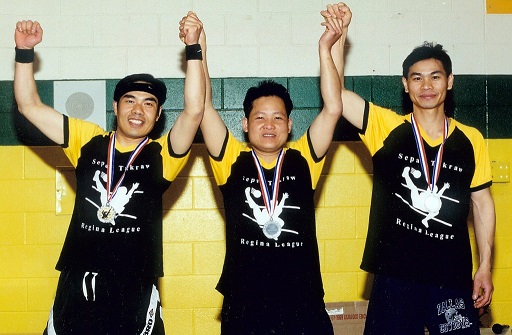
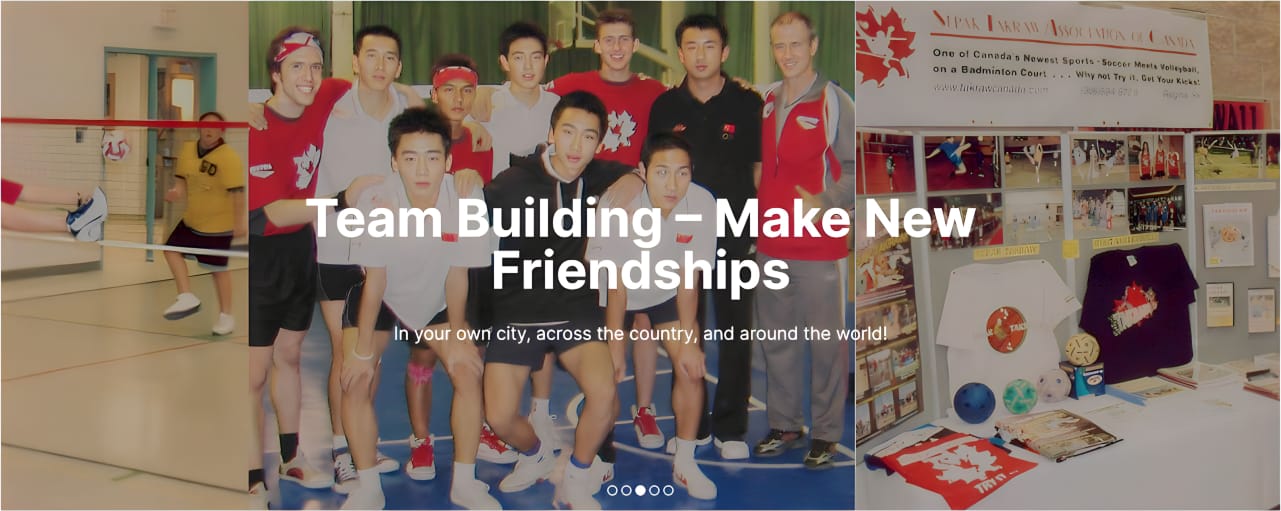
Regina Laos Team, 1st Canadian Open, 1999
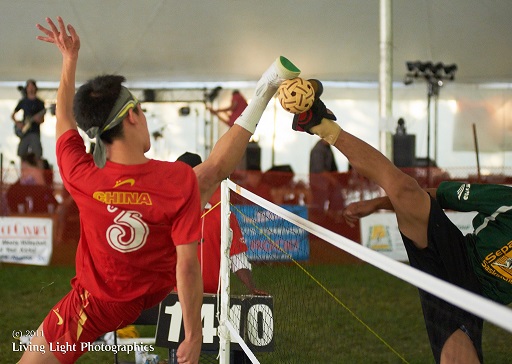
China vs. Sask (Team Canada), Cdn Open, 2011
Mid to late 1970's: Thousands of Laotian refugees immigrate to Canada after civil war in Laos ends in 1975 with political control being taken over by a communist regime. In major cities across Canada where the Laotians have settled, they play Sepak Takraw amongst themselves, usually in parks during the spring and summer seasons.
1988: Rick Engel, a teacher from Saskatchewan who was teaching English in China, encounters Sepak Takraw while travelling through Thailand and Malaysia during his holidays.
1989 - 1992: Rick comes back to Canada to accept a job teaching Chinese and co-ordinate the Asia Pacific Project in White City School, just outside Regina, Saskatchewan. As part of his job to help other teachers in the school incorporate aspects from Asia into their plans, Rick gets 12 hand-woven rattan Takraw balls and a basic set of rules from a friend in Thailand. Sepak Takraw is introduced as a special unit in Physical Education classes for grades 6 - 9.
1993/94: In an attempt to bridge cultural gaps of understanding and provide unique opportunities for Canadian youth, Rick founds what has now become a non-profit organisation known as Asian Sport, Education & Culture (ASEC) International. One of the primary programs that develop is the School Asia Presentations Program, where students learn about Asia through slides and many various, fun, hands-on Asian activities. One of the activities is Sepak Takraw, using rattan balls.
1994/95: While teaching an evening English As a Second Language class through the Open Door Society in Regina, Rick discovers that a couple of his Laotian students are Takraw players and that they play every weekend. Rick, along with a couple of friends, accepts the invitation to join them and plays often. Interest grows in the Takraw activity part of the School Asia Presentations - plastic Takraw balls are now used. Schools start asking where they can purchase balls so that they can continue to play on their own, but the closest source was to order from the USA.
1995/96: To make it easier for schools to get involved in Takraw, ASEC begins importing and selling balls on a small trial basis, and set up a display at the Saskatchewan Phys. Ed. Teachers' Conference in May ('96).
August, 1996: Sebastien Verdy of Montreal, Quebec, wins the World Championships in Footbag Net in the singles event, and with Emmanuel Bouchard, also wins the doubles title.
November, 1996: Now wanting to put his energy into a sport he watched the Laotians play as a youth, Sebastien travels to Thailand to start what would turn out to be about 2 years of training to play Sepak Takraw at a highly skilled level.
1996/97: ASEC sends its brochures to school division offices across Canada that includes an insert regarding the handling of Takraw equipment and orders are placed from across the country. Rick introduces Takraw to about 70 teachers at the annual Saskatchewan Phys. Ed. Teachers' Conference in May ('97). Over 100 schools have now had an ASEC Asia Presentation, many of which included an introduction to Takraw.
June, 1997: Sebastien is re-united in Thailand with Emmannuel, who also started playing Takraw in Montreal, and a Lao friend, Sompong Sayarinh, to compete in the 13th King's Cup Sepaktakraw World Championships and go all the way to the Division lll finals, where they were defeated by Korea.
March, 1998: Sebastien Verdy's Takraw team from Montreal is invited to play in an international tournament held in Bogota, Columbia, where they are victorious over an American team in the finals.
1997/98: ASEC displays and presents a session on Takraw at the Alberta Phys. Ed. Teachers' Conference in Medicine Hat, as well as at a National Teachers' Conference in Saskatoon, SK. Altogether, approximately 200 teachers take in the sessions. There is much excitement and enthusiasm over this new sport! ASEC and the Catholic Lao Association of Saskatchewan organise and host Canada's first provincial Takraw tournament. It involves junior & senior high school (boys and girls), as well as men's teams - 14 in all. Guest teams are invited from Winnipeg and Sebastien's team from Montreal (who comes without Sebastien, as he was back in Thailand training). The event receives generous local media coverage.
1998/99: ASEC organises a summer & fall Takraw club, as well as a winter league, at the YWCA in Regina, Saskatchewan that sees over 100 participants altogether. To gather more footage for a documentary on Sepak Takraw that they are working on, as well as a promotional/instructional video, ASEC sends Rick Engel to Thailand to film at the 14th King's Cup Sepaktakraw World Championships in response to an invitation from the International Sepaktakraw Federation (ISTAF). Although Sebastien's teammates were not able to join him in Thailand to compete in this event, and Canada was not represented in the competition, ASEC International was able to produce a Sepak Takraw Instructional video from footage captured that was then made available to schools as a valuable resource to help P.E. Teachers introduce the sport.
December 11, 1998: The Sepak Takraw Association of Canada (STAC) is officially established with an approved Letters of Patent from the federal government in Ottawa incorporating the same as a non-profit sports association. ASEC International was the driving force behind this development. ASEC International, with the help of Partners In Motion, produce a TV Public Service Announcement to promote Takraw and copies are sent to player contacts in other provinces across Canada.
January 21, 1999: The Board of Directors and Executive Committee for the Sepak Takraw Association of Canada are elected at its first official meeting. Rick Engel is elected as STAC's first President.
April 24, 1999: ASEC hosts Saskatchewan's 2nd Annual Provincial Sepaktakraw Championships in Regina. Altogether 9 teams compete, including 3 H. S. girl's teams, 2 H. S. boy's teams, and 4 men's teams.
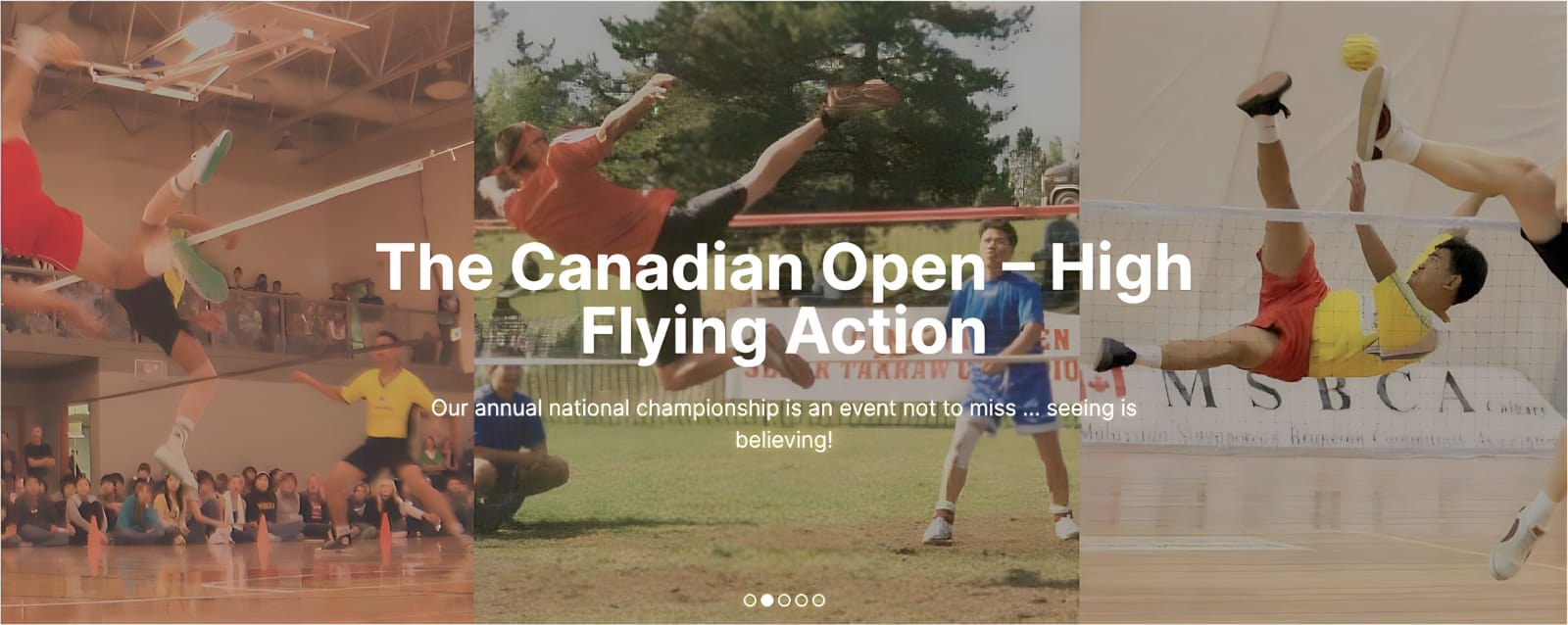
May 23 & 24, 1999: STAC and ASEC together host the first Canadian Sepak Takraw Championships in Regina, Saskatchewan at the Campbell Collegiate High School Gym. Unfortunately the Manitoba and Alberta teams could not come on that weekend, so just five teams from the two provinces of Saskatchewan and Quebec compete for the national title. It is Sebastien's team from Quebec that takes Gold, a Regina team wins the Silver and Bronze goes to Saskatoon. All those involved believe that Sepak Takraw has the potential for a great future in Canada.
Nov. 26 – Dec. 1, 1999: Rick Engel leads the ’99 Canadian Championship team from Montreal (Sebastian, Emmanuel, Noy) to compete in the 15th King’s Cup Sepak Takraw World Championships in Bangkok, and Rick participates in the ISTAF Meeting on behalf of STAC, who had submitted its application to become an ISTAF member country.
Mar. 23-26, 2000: Regina players Rick Engel, Perry Senko, and Vatsone Phonesavatdy represent Canada in the Perilly’s World Cup in Malaysia, when the Montreal team could not go at the last minute. Rick also attended a Sepak Takraw Coaching Course and became Canada’s first internationally certified coach in the sport.
Aug. 2-6, 2000: The 2nd Annual Canadian Open Sepak Takraw Championships take place as a feature event of ‘Buffalo Days’, Saskatchewan’s Summer Fair and Exhibition, with teams from SK, MB, BC and USA competing in an event that had 27 sponsors, 46 volunteers, 15 entertainer groups, and over 3,000 spectators throughout the week.
Nov. 15-19, 2000: Team Canada (Rick Engel, Perry Senko, Brydon Blacklaws) competes at the 16th King’s Cup World Sepak Takraw Championships and win Silver in division III, after a 2-week training camp in Ayutthaya. Rick also completed an ISTAF Referee Course and co-umpired matches at the King’s Cup, was elected to the ISTAF Council during the event, and his proposal for a new ‘Rally Point’ Scoring System (to reduce the time length of matches) is adopted, taking effect in 2001.
Dec. 3, 2000: STAC is officially accepted into the Canadian Olympic Association as a Class E Member and is recognized and introduced to all other members at COA’s 2001 Congress in Toronto, Apr. 20-22, which Rick Engel is sent to attend (the first of several).
2001: On July 6-7, Brydon’s junior team from White Rock, BC travel with Rick and Vatsone to compete in the Hmong Festival Sepak Takraw Tournament held in St. Paul, MN, USA (the first of several). On Aug. 4-6, STAC hosts the 2001 Canadian Open Sepak Takraw Championships in Edmonton, AB, as a feature event of the city’s annual Heritage Festival (and again in 2002), with 51 athletes on 14 teams from BC, AB, SK, and MB in Canada, and guest teams from USA and JAPAN in front of an estimated 10,000 spectators over the weekend! On Nov. 17, a Canada vs USA Sepak Takraw 3-Match Series is played, filmed and televised on Access 7 Television, the first televised Sepak Takraw match in North America.
2002: Mar. 19-28, STAC works with a Nanaimo, BC professor to organize a series of Sepak Takraw Game Demonstrations on Vancouver Island and around BC’s lower mainland with a Canadian team and Two men’s teams and one woman’s team from Udon Thani University in Thailand. On Aug. 3-5, An Edmonton team – of former footbag net players – wins the Canadian Championship at the Heritage Festival as thousands watch the action.
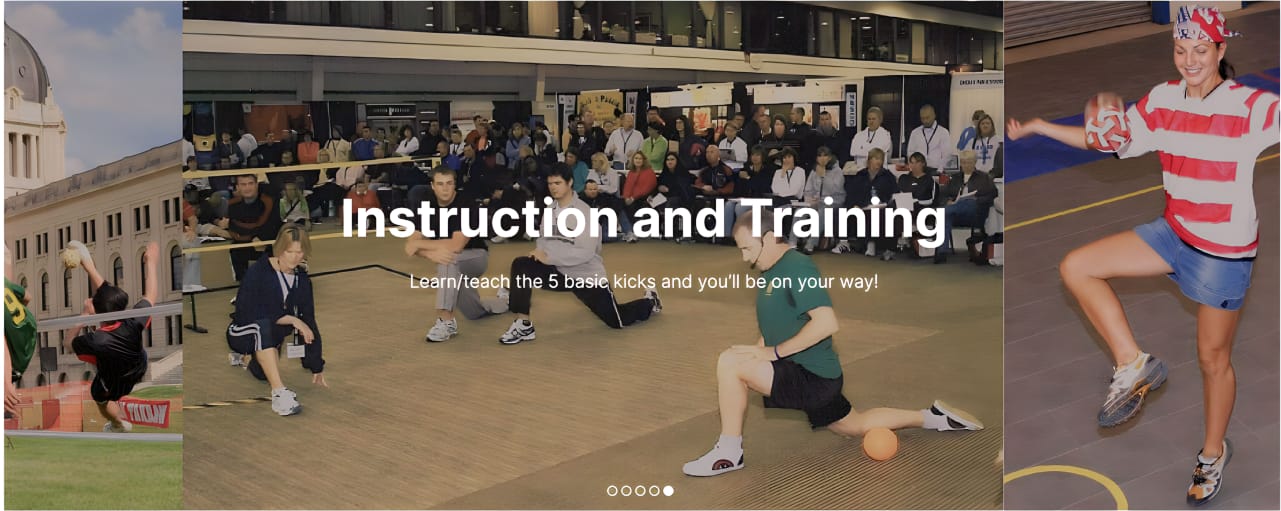
2003: Rick Engel authors and STAC publishes the 1st Edition of, ‘Sepak Takraw 101 – The Complete Instructional/Coaching Manual for Sepak Takraw (Kick Volleyball)’, which schools start ordering to help them introduce and teach the sport in Canada.
2004: On June 24-30, Team Canada, Rick with 2 of the ’02 Canadian Champions from Edmonton, Pat Quinn and Ben Cochrane compete in the 2004 Telekom Malaysia World Sepak Takraw Championships in Penang, coming in 2nd place in their pool, advancing to the quarterfinals, but then losing to Malaysia, who went on to win gold in the final match against Myanmar. On Dec. 7-13, STAC reunites Rick, Perry, and Vatsone to represent Canada in the King’s Cup Sepak Takraw World Championships, but this time just in the ‘Doubles Event’. They were unfortunately knocked out in a match against Germany who defeated them in two sets. At the International Sepak Takraw Federation (ISTAF) Congress and Quadrennial Elections during the King’s Cup, Rick is elected Vice President of ISTAF (1 of 7).
2005: On Aug. 1-6, to celebrate the province of Saskatchewan’s 100th birthday, STAC hosted “THE CENTENNIAL CUP”, a series of exhibition matches, game demonstrations of Sepak Takraw and Hoop Takraw, along with the Canadian Championships with international guest teams from USA and Japan, and a lot of cultural entertainment/performances. It was all a feature event of Regina’s Summer Fair/Exhibition, Buffalo Days (and again in 2006) and included 15 teams in Canadian Junior Men’s, Junior Women’s, and Senior Men’s divisions from three provinces and three countries, with an estimated 4200 spectators. In Mid-August, STAC organizes Sepak Takraw demos and Public Participation events at the Canada Summer Games in in Regina that sees hundreds of participants and even more spectators.
2006: At the End of August, Jr. players Erick Phonsavatdy, Chris Heidt, with Sr. player/coach Rick Engel, travel to Vientiane, Laos for a 2-week training camp. In September, the four compete in Doubles Events at the King’s Cup, Erick and Chris in the Jr. division, and Rick and Caelan in the Sr. division. Though neither team made the finals, it was a tremendous experience for the young boys. In October, Rick and Caelan are flown to New York, along with two players from St. Paul, MN, to conduct Sepak Takraw demonstration events in public parks around New York city.
2007: On April 16, at an evening gala in Regina, Rick Engel is revealed as the one chosen from a shortlist to receive the national Enriching My Canada and Yours (EMCY) Award in the “Diversity in Sports” category for his hard and dedicated work in bringing diversity to sports through the development of the sport of Sepak Takraw right across the country. In July-August, Rick, Vatsone, Caelan, and Invan Senthavong travel to compete in the 3 of the 5 Malaysian International Sepak Takraw Grand Prix back-to-back tournaments. In November, STAC and the Malaysian Sepaktakraw Association (PSM), together with STAC’s partner organizations, bring two teams with four officials from Malaysia to Canada to conduct 13 Exhibition Matches in schools and public events in 7 cities across Canada in front of an accumulated 4,000 screaming spectators. Those lucky cities were Calgary, Regina, Moose Jaw, Winnipeg, Markham, Newmarket and Toronto. As a result, 5 new Sepak Takraw programs started up.
2008: On July 1, Regina’s Jr. and Sr. Men’s teams win gold in the provincial championships, then in August, they win gold in the Canadian Open Championships, hosted for the first time in Calgary, AB, that was also attended by two teams from Malaysia, sponsored by Malaysian Airlines, who played exhibition matches with all the Canadian teams, bringing a lot of extra excitement to the event. On Oct. 28-Nov. 2, the Sr. team (Rick Engel, Win San, Caelan Reilly, along with the young rising star Samuel Coffey from Calgary) then represent Canada in an International tournament in Pasir Gudang, Malaysia where they advance to the quarter finals, then lose to Indonesia. Right after, on Nov. 6-11, they competed in the China-ASEAN International Invitational Tournament in Nanning (where Rick had lived for 2 years, teaching English)! Though they didn’t do as well in that tournament, the team still benefited from incredible experiences, including being the main subject of a documentary that was made about them by Guangxi TV!